
목차
- 미로 탈출 넘버원 (1)
- 지도와 폭탄 (1)
- 테트리스
- 알까기 챔피언 (1)
- 최소 합차 (1)
1. 미로 탈출 넘버원 (1)
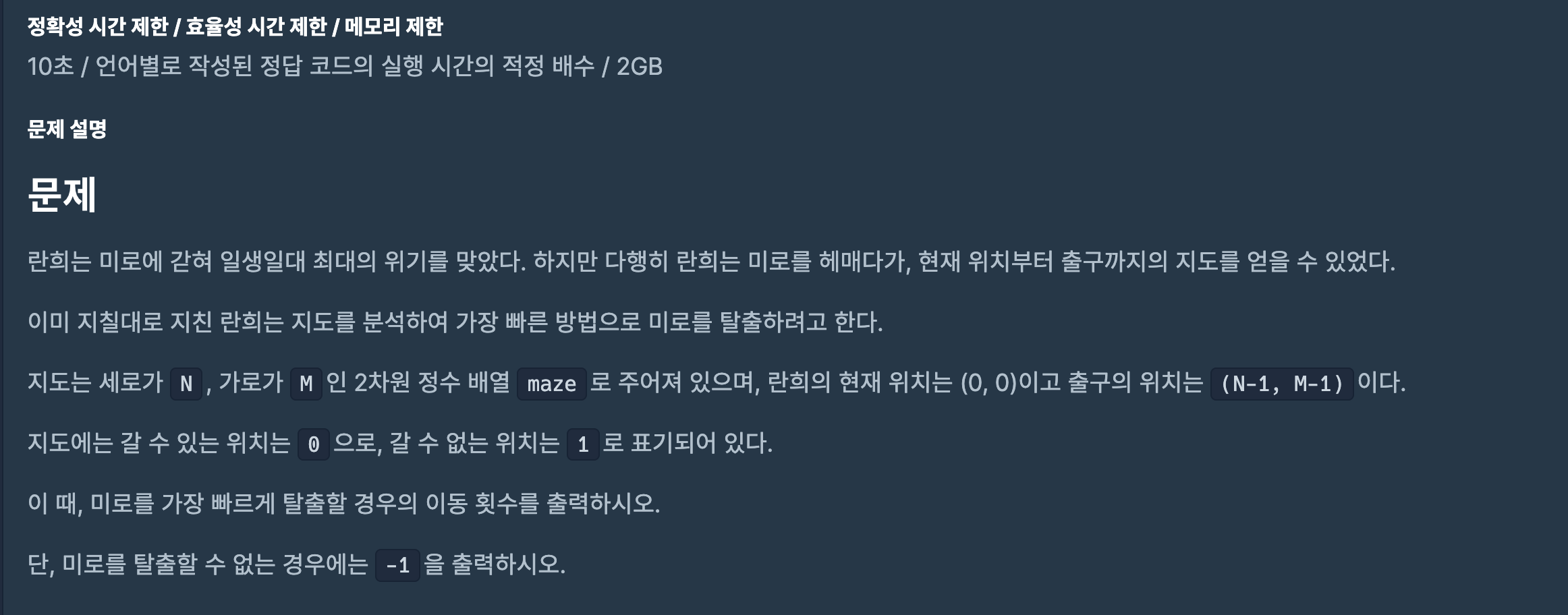
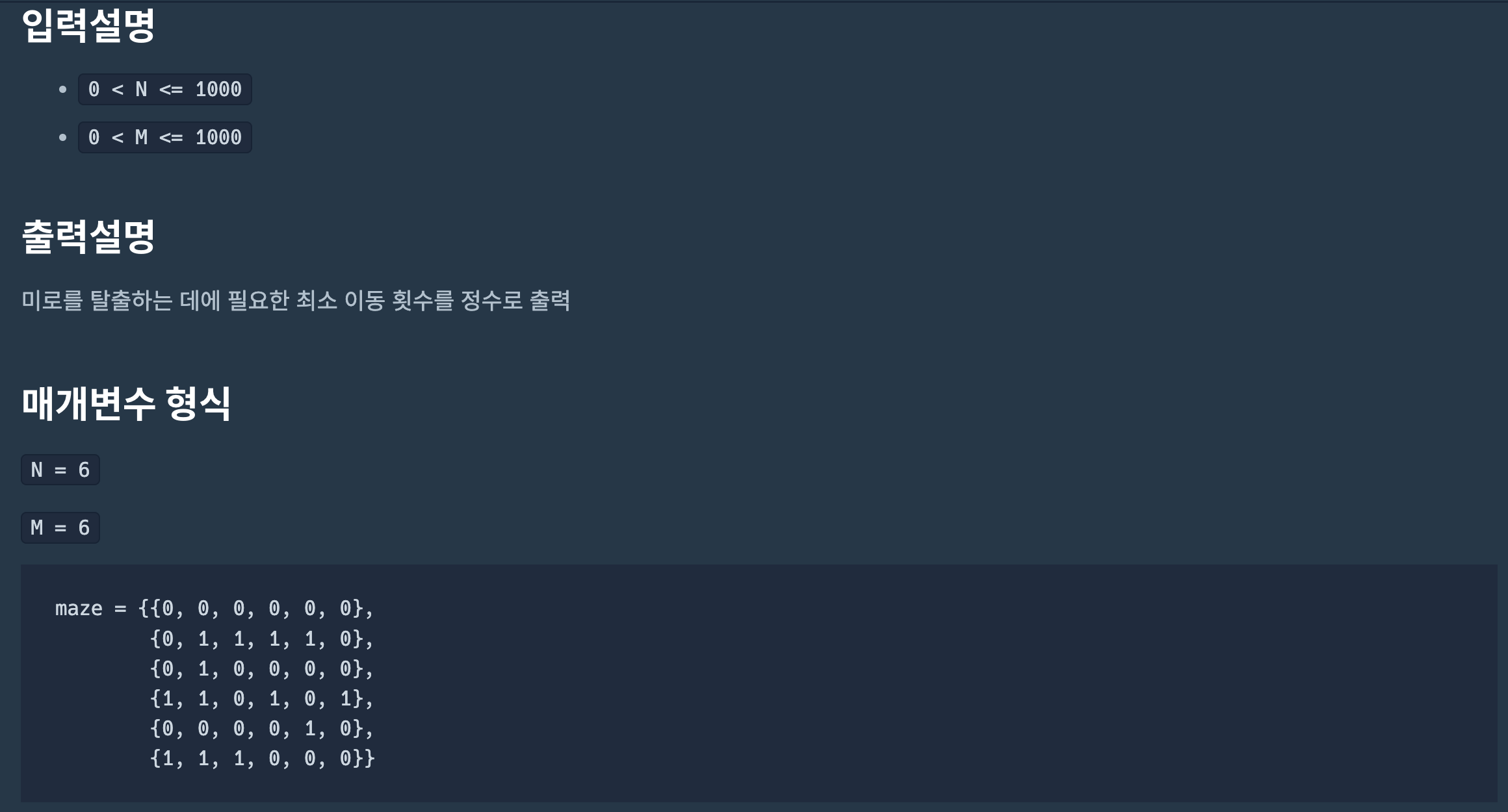

풀이
import collections

def solution(N, M, maze):
    rows = N
    cols = M

    def bfs():
        directions = [(-1, 0), (1, 0), (0, -1), (0, 1)]

        visited = [[False]*M for _ in range(N)]

        que = collections.deque()
        que.append((0, 0, 0)) # x, y, 거리
        visited[0][0] = True

        while que:
            x, y, dist = que.popleft()

            if (x, y) == (N-1, M-1):
                return dist

            for dx, dy in directions:
                nx, ny = x + dx, y + dy

                if 0 <= nx < rows and 0 <= ny < cols:
                    if not visited[nx][ny] and maze[nx][ny] == 0:
                        visited[nx][ny] = True
                        que.append((nx, ny, dist+1))
        return -1

    return bfs()
Testcase
# 테스트 1
입력값 〉 6, 6, [[0, 0, 0, 0, 0, 0], [0, 1, 1, 1, 1, 0], [0, 1, 0, 0, 0, 0], [1, 1, 0, 1, 0, 1], [0, 0, 0, 0, 1, 0], [1, 1, 1, 0, 0, 0]]
기댓값 〉 16
2. 지도와 폭탄 (1)
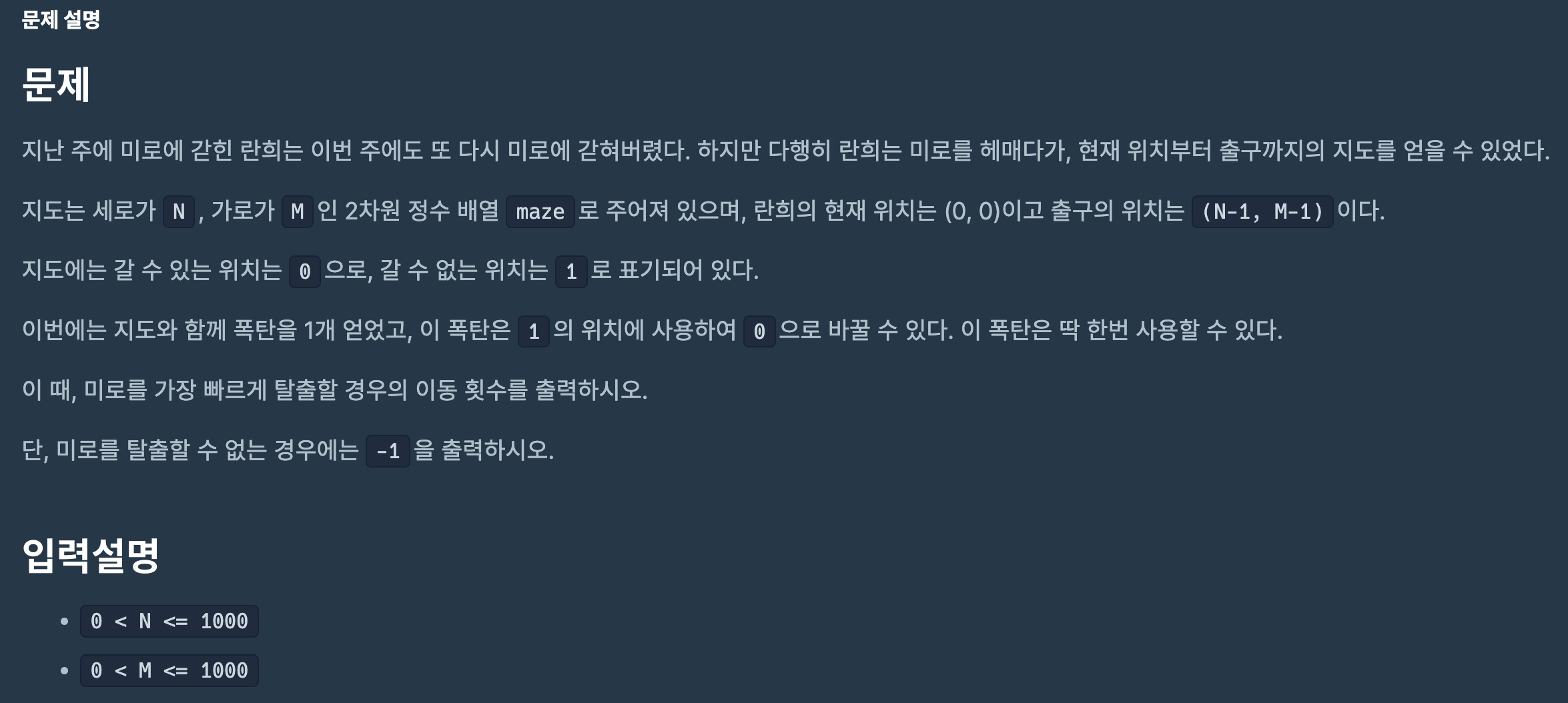
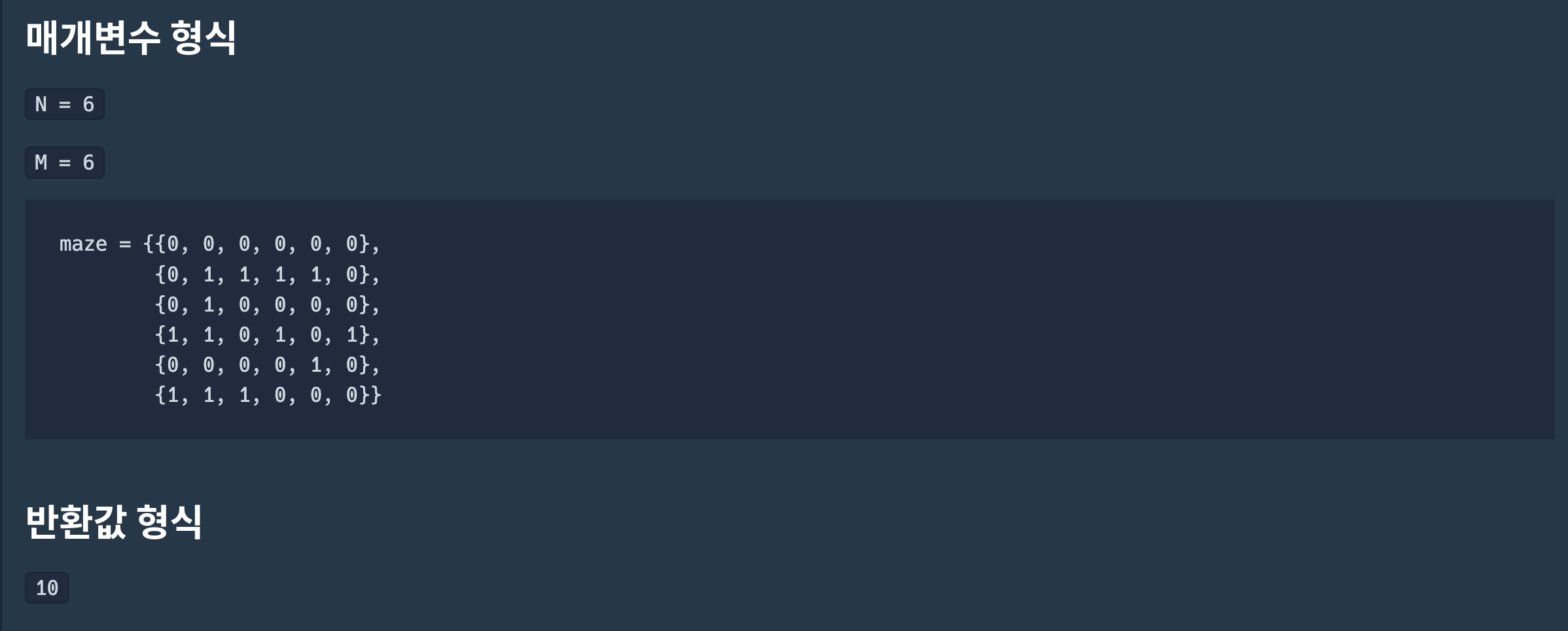
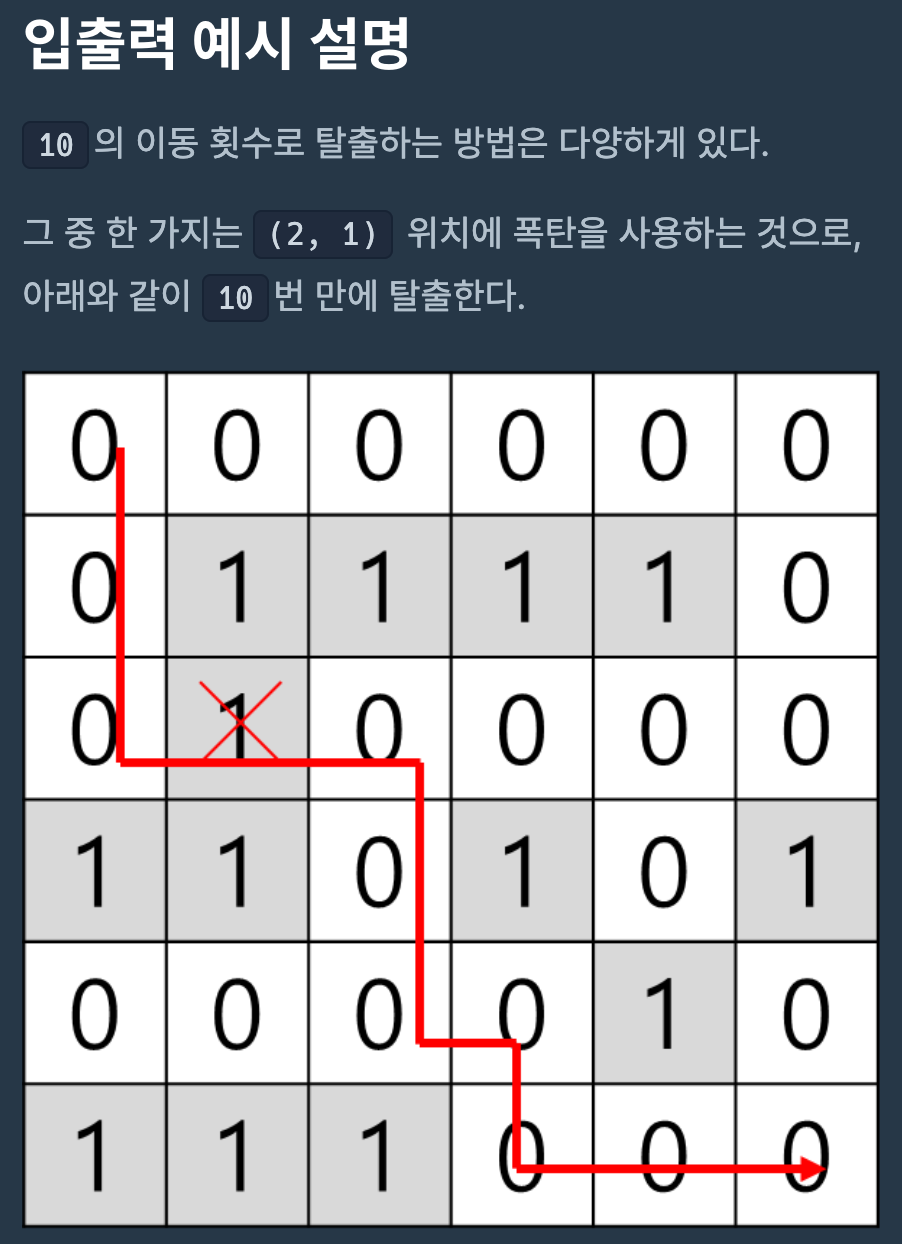
풀이
내 코드
import collections

def solution(N, M, maze):
    rows = N
    cols = M
    directions = [(1, 0), (-1, 0), (0, 1), (0, -1)]

    def bfs(dmaze):
        visited = [[False]*N for _ in range(M)]

        que = collections.deque()
        que.append((0, 0, 0))
        visited[0][0] = True

        while que:
            x, y, dist = que.popleft()

            if (x, y) == (N-1, M-1):
                return dist

            for dx, dy in directions:
                nx, ny = x + dx, y + dy

                if 0 <= nx < rows and 0 <= ny < cols:
                    if not visited[nx][ny] and maze[nx][ny] == 0:
                        visited[nx][ny] = True
                        que.append((nx, ny, dist + 1))

        return -1

    # 1인 곳 찾기
    blocks = []
    for i in range(N):
        for j in range(M):
            if maze[i][j] == 1:
                blocks.append((i, j))

    results = []
    for a, b in blocks:
        maze[a][b] = 0
        retv = bfs(maze)
        if retv != -1:
            results.append(retv)
        maze[a][b] = 1

    results.sort()

    return -1 if len(results) == 0 else results[0]
정답코드
def solution(N, M, maze):
    q = []
    q.append((0, 0, 1))

    di = [0, 0, 1, -1]
    dj = [1, -1, 0, 0]

    visited = [[[0 for _ in range(2)] for _ in range(M)] for _ in range(N)]

    while q:
        i, j, k = q.pop(0)

        if (i, j) == (N-1, M-1):
            return visited[i][j][k]

        for di_, dj_ in zip(di, dj):
            new_i = i + di_
            new_j = j + dj_

            if new_i < 0 or new_i >= N or new_j < 0 or new_j >= M:
                continue

            if visited[new_i][new_j][k] > 0:
                continue

            if maze[new_i][new_j] == 1 and k == 1:
                q.append((new_i, new_j, k-1))
                visited[new_i][new_j][k-1] = visited[i][j][k] + 1

            if maze[new_i][new_j] == 0:
                q.append((new_i, new_j, k))
                visited[new_i][new_j][k] = visited[i][j][k] + 1

    return -1
Testcase
# 테스트 1
입력값 〉 6, 6, [[0, 0, 0, 0, 0, 0], [0, 1, 1, 1, 1, 0], [0, 1, 0, 0, 0, 0], [1, 1, 0, 1, 0, 1], [0, 0, 0, 0, 1, 0], [1, 1, 1, 0, 0, 0]]
기댓값 〉 10
3. 테트리스
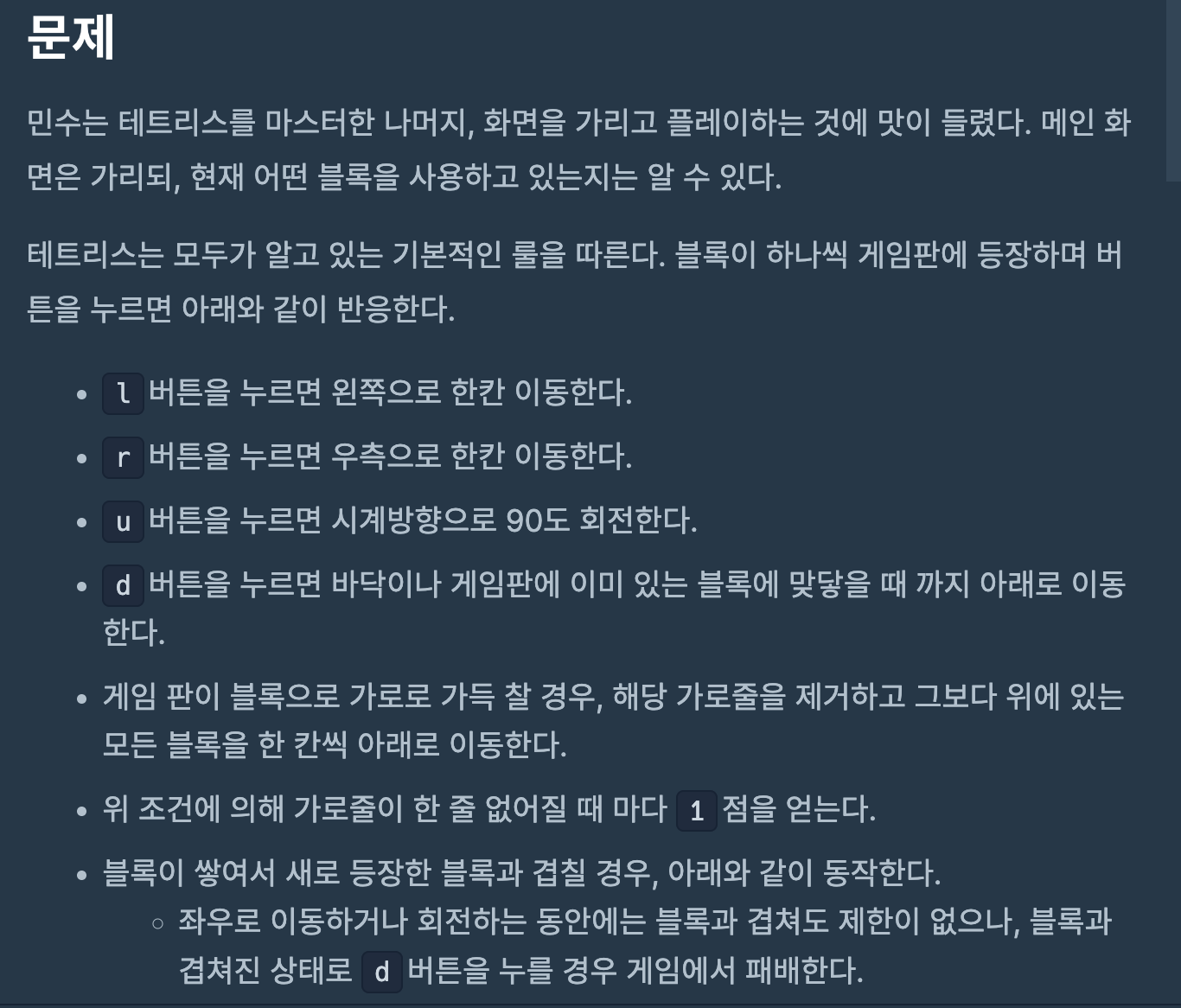
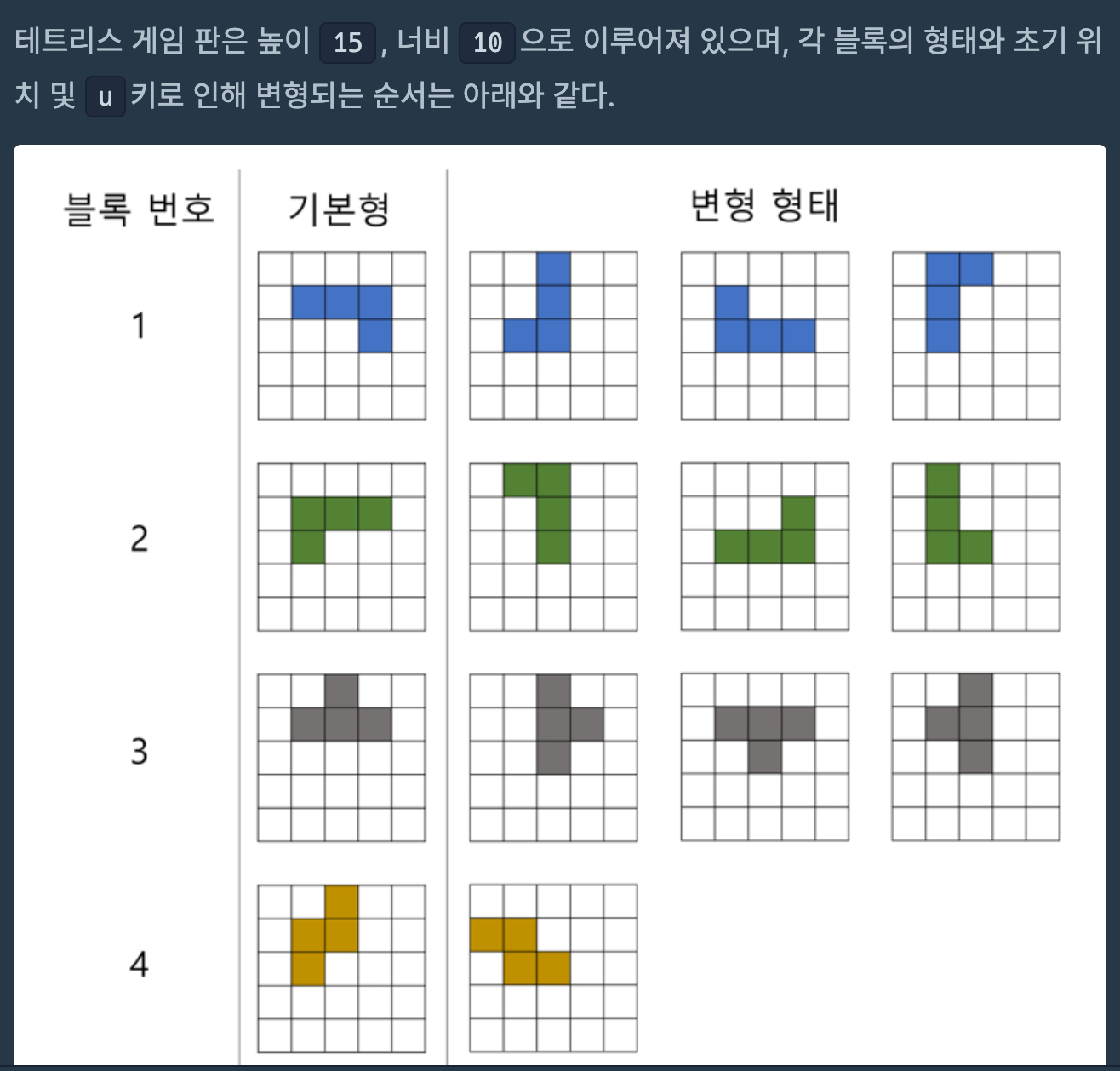
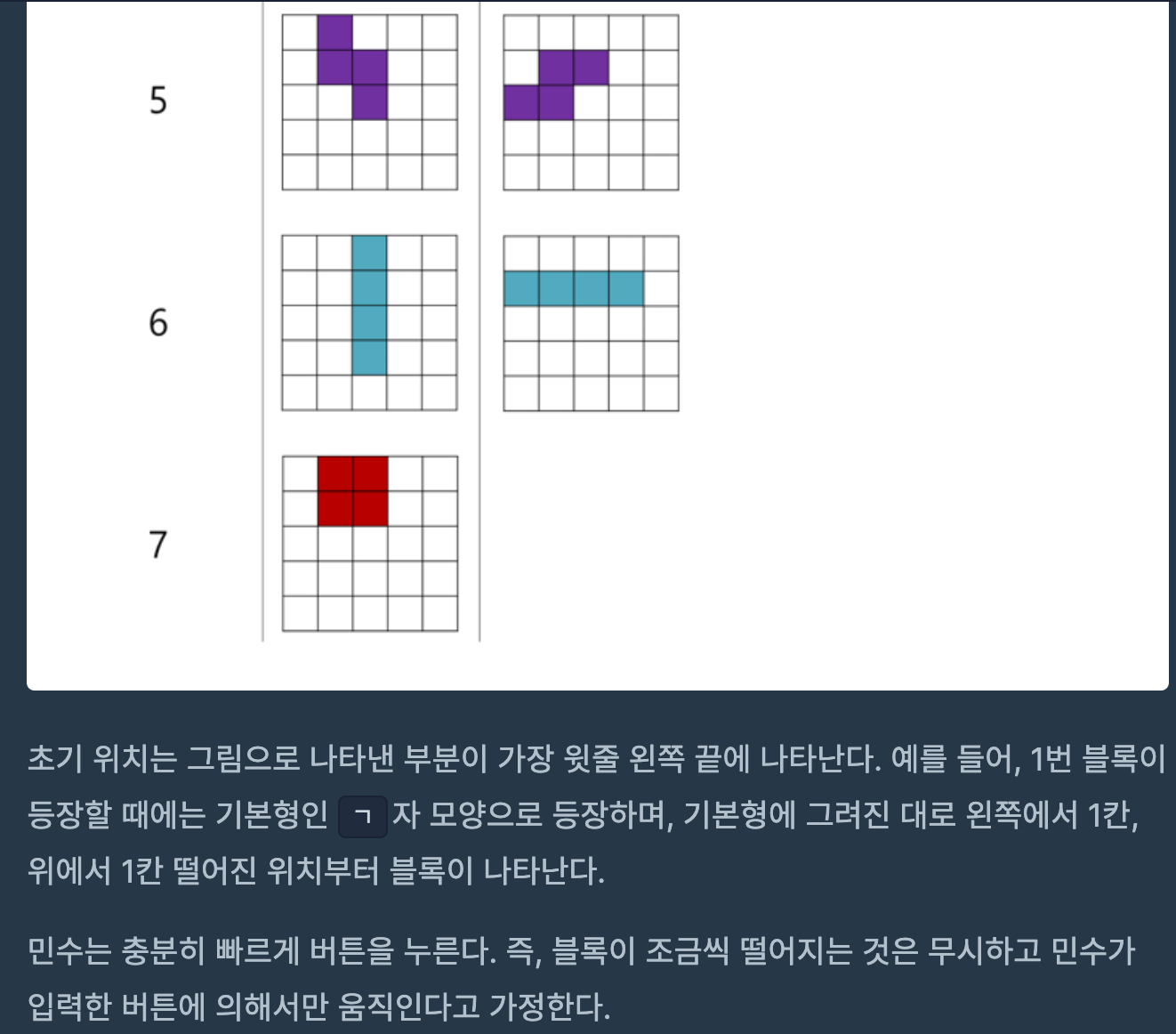
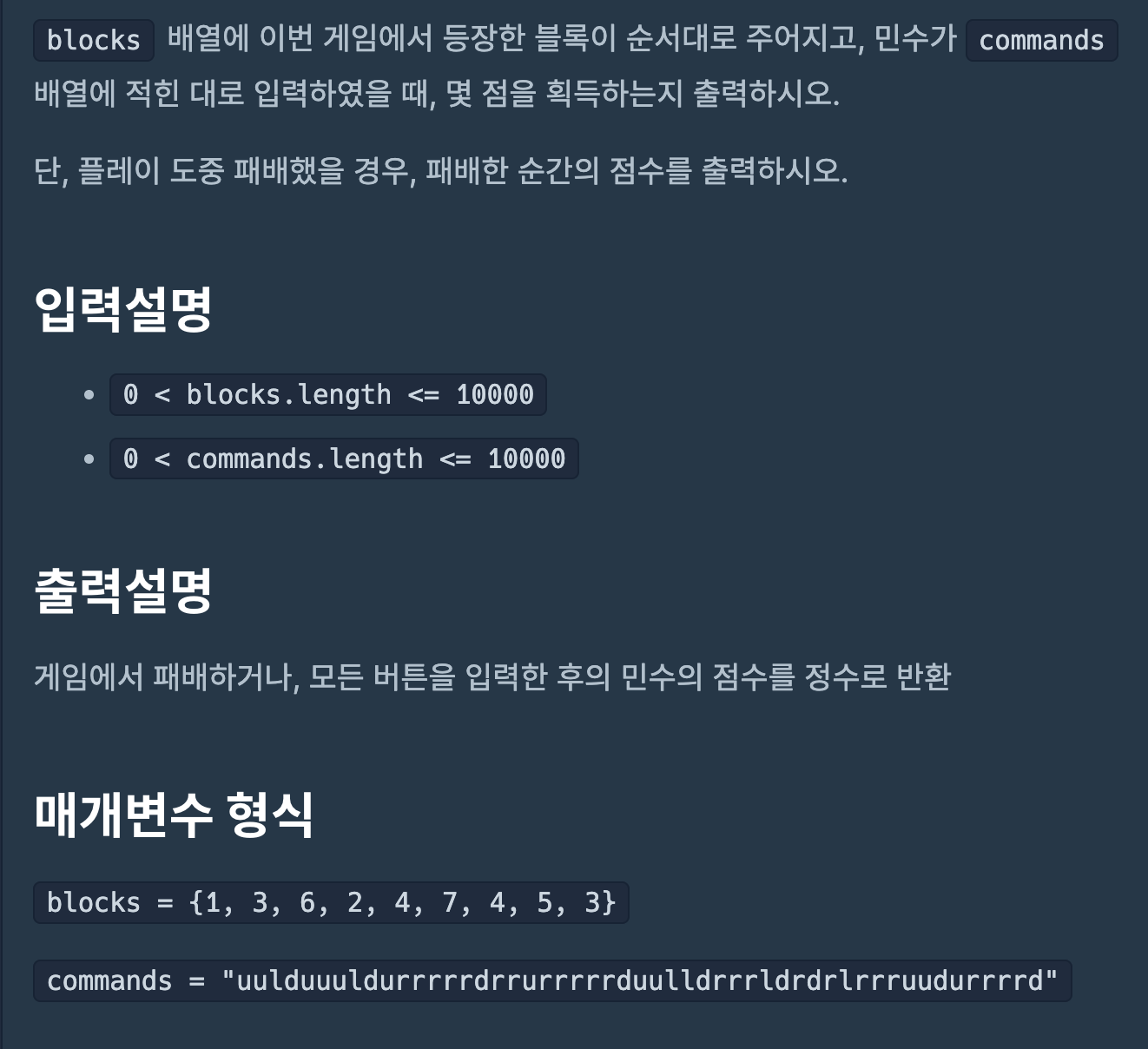
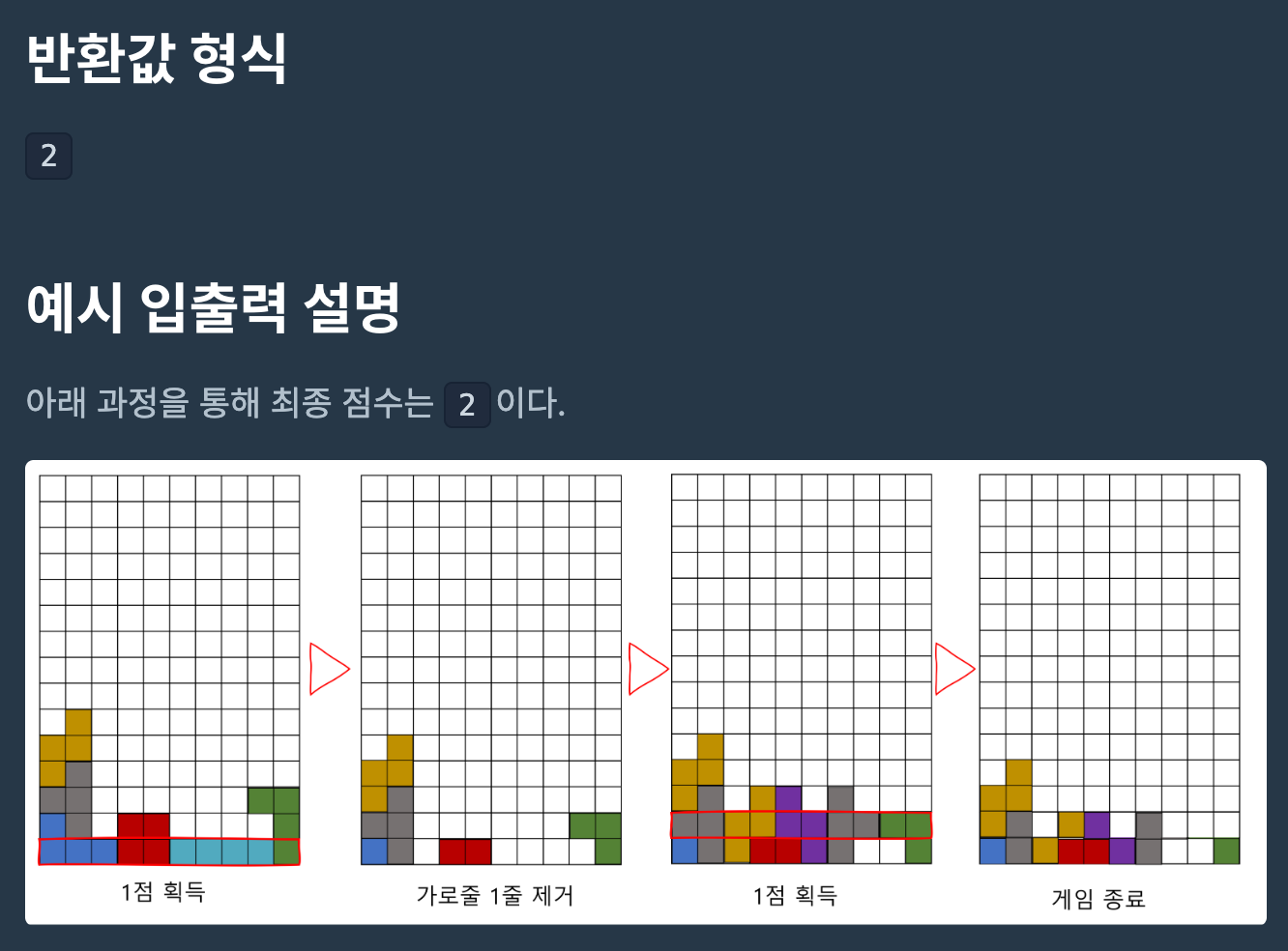
풀이
"""
 * 시뮬레이션 문제로, 모두가 익숙한 테트리스 문제입니다.
 * 차근 차근 구현하면 어렵지 않지만, 빠르고 정확하게 구현하는 것이 관건입니다.
 * 익숙한 대상으로 시뮬레이션 연습을 하고, 추후에는 새로운 시뮬레이션 대상이
 * 문제로 주어졌을 때 해결하는 연습을 하도록 합시다.
"""

# 테트리스의 블록별 기본형과 변형 형태는 코드로 주어집니다.
TETRIS_BLOCK = []

BLOCK = []
TETRIS_BLOCK.append(BLOCK)

BLOCK = [[[0, 0, 0, 0],
          [0, 1, 1, 1],
          [0, 0, 0, 1]],
          [[0, 0, 1],
           [0, 0, 1],
           [0, 1, 1]],
          [[0, 0, 0, 0],
           [0, 1, 0, 0],
           [0, 1, 1, 1]],
          [[0, 1, 1],
           [0, 1, 0],
           [0, 1, 0]]]
TETRIS_BLOCK.append(BLOCK)

BLOCK = [[[0, 0, 0, 0],
          [0, 1, 1, 1],
          [0, 1, 0, 0]],
          [[0, 1, 1],
           [0, 0, 1],
           [0, 0, 1]],
          [[0, 0, 0, 0],
           [0, 0, 0, 1],
           [0, 1, 1, 1]],
          [[0, 1, 0],
           [0, 1, 0],
           [0, 1, 1]]]
TETRIS_BLOCK.append(BLOCK)

BLOCK = [[[0, 0, 1, 0],
          [0, 1, 1, 1]],
         [[0, 0, 1, 0],
          [0, 0, 1, 1],
          [0, 0, 1, 0]],
         [[0, 0, 0, 0],
          [0, 1, 1, 1],
          [0, 0, 1, 0]],
         [[0, 0, 1],
          [0, 1, 1],
          [0, 0, 1]]]
TETRIS_BLOCK.append(BLOCK)

BLOCK = [[[0, 0, 1],
          [0, 1, 1],
          [0, 1, 0]],
         [[0, 0, 0],
          [1, 1, 0],
          [0, 1, 1]]]
TETRIS_BLOCK.append(BLOCK)

BLOCK = [[[0, 1, 0],
          [0, 1, 1],
          [0, 0, 1]],
         [[0, 0, 0],
          [0, 1, 1],
          [1, 1, 0]]]
TETRIS_BLOCK.append(BLOCK)

BLOCK = [[[0, 0, 1],
          [0, 0, 1],
          [0, 0, 1],
          [0, 0, 1]],
         [[0, 0, 0, 0],
          [1, 1, 1, 1]]]
TETRIS_BLOCK.append(BLOCK)

BLOCK = [[[0, 1, 1],
          [0, 1, 1]]]
TETRIS_BLOCK.append(BLOCK)

def solution(blocks, commands):
    WIDTH = 10
    HEIGHT = 15
    board = [[0 for _ in range(WIDTH)] for _ in range(HEIGHT)]

    if len(blocks) == 0:
        return 0

    block_ind = 0
    pos = 0
    score = 0
    shape = 0
    ind = 0
    while True:
        if ind >= len(commands) or block_ind >= len(blocks):
            break

        curr_blocks = TETRIS_BLOCK[blocks[block_ind]]
        curr_block = curr_blocks[shape]

        if commands[ind] == 'u':
            shape = (shape + 1) % len(curr_blocks)

        elif commands[ind] == 'l':
            is_possible = True
            for i in range(len(curr_block)):
                for j in range(len(curr_block[0])):
                    if j + pos - 1 < 0 and curr_block[i][j] == 1:
                        is_possible = False
                        break
                if not is_possible:
                    break
            if is_possible:
                pos -= 1

        elif commands[ind] == 'r':
            is_possible = True
            for i in range(len(curr_block)):
                for j in range(len(curr_block[0])):
                    if j + pos + 1 >= WIDTH and curr_block[i][j] == 1:
                        is_possible = False
                        break
                if not is_possible:
                    break
            if is_possible:
                pos += 1

        elif commands[ind] == 'd':
            for i in range(len(curr_block)):
                for j in range(len(curr_block[0])):
                    if curr_block[i][j] == 1 and board[i][j + pos] == 1:
                        return score

            pos_y = 0
            is_done = False
            while True:
                for i in range(len(curr_block)):
                    for j in range(len(curr_block[0])):
                        if curr_block[i][j] == 1 and i + pos_y + 1 >= HEIGHT:
                            is_done = True
                        elif curr_block[i][j] == 1 and board[i+pos_y+1][j+pos] == 1:
                            is_done = True
                        if is_done:
                            break
                    if is_done:
                        break
                if is_done:
                    break
                pos_y += 1

            for i in range(len(curr_block)):
                for j in range(len(curr_block[0])):
                    if curr_block[i][j] == 1:
                        board[i+pos_y][j+pos] = 1

            lines_lut = []
            for i in range(HEIGHT):
                if sum(board[i]) == WIDTH:
                    score += 1
                    lines_lut = [-1] + lines_lut
                else:
                    lines_lut.append(i)

            for i, di in enumerate(lines_lut):
                for j in range(WIDTH):
                    if di < 0:
                        board[i][j] = 0
                    else:
                        board[i][j] = board[di][j]

            pos = 0
            shape = 0
            block_ind += 1

        ind += 1

    return score


# blocks = [1, 3, 6, 2, 4, 7, 4, 5, 3]
# commands = "uulduuuldurrrrrdrrurrrrrduulldrrrldrdrlrrruudurrrrd"
# print(solution(blocks, commands))
Testcase
# 테스트 1
입력값 〉 [1, 3, 6, 2, 4, 7, 4, 5, 3], "uulduuuldurrrrrdrrurrrrrduulldrrrldrdrlrrruudurrrrd"
기댓값 〉 2
4. 알까기 챔피언 (1)
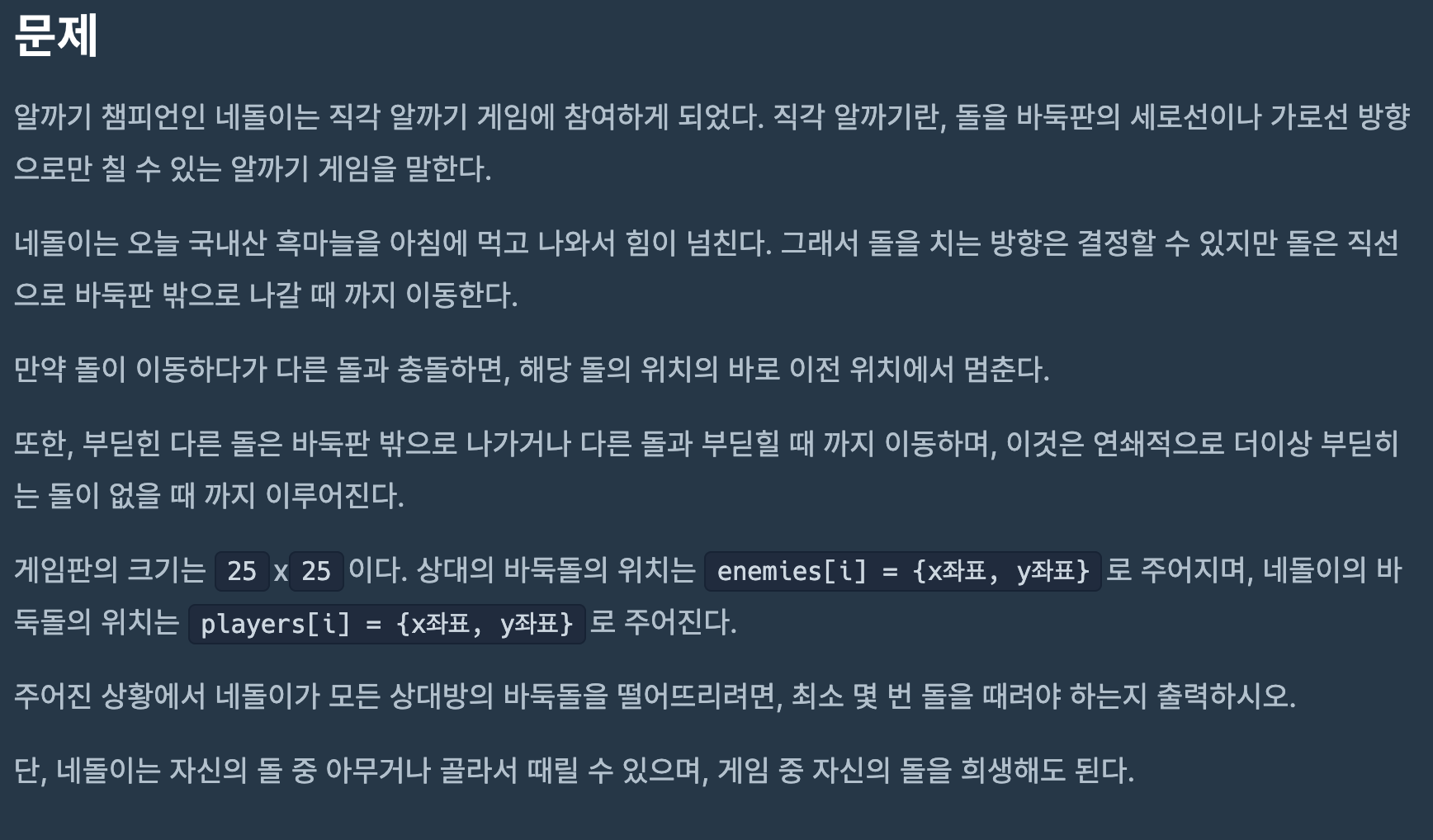
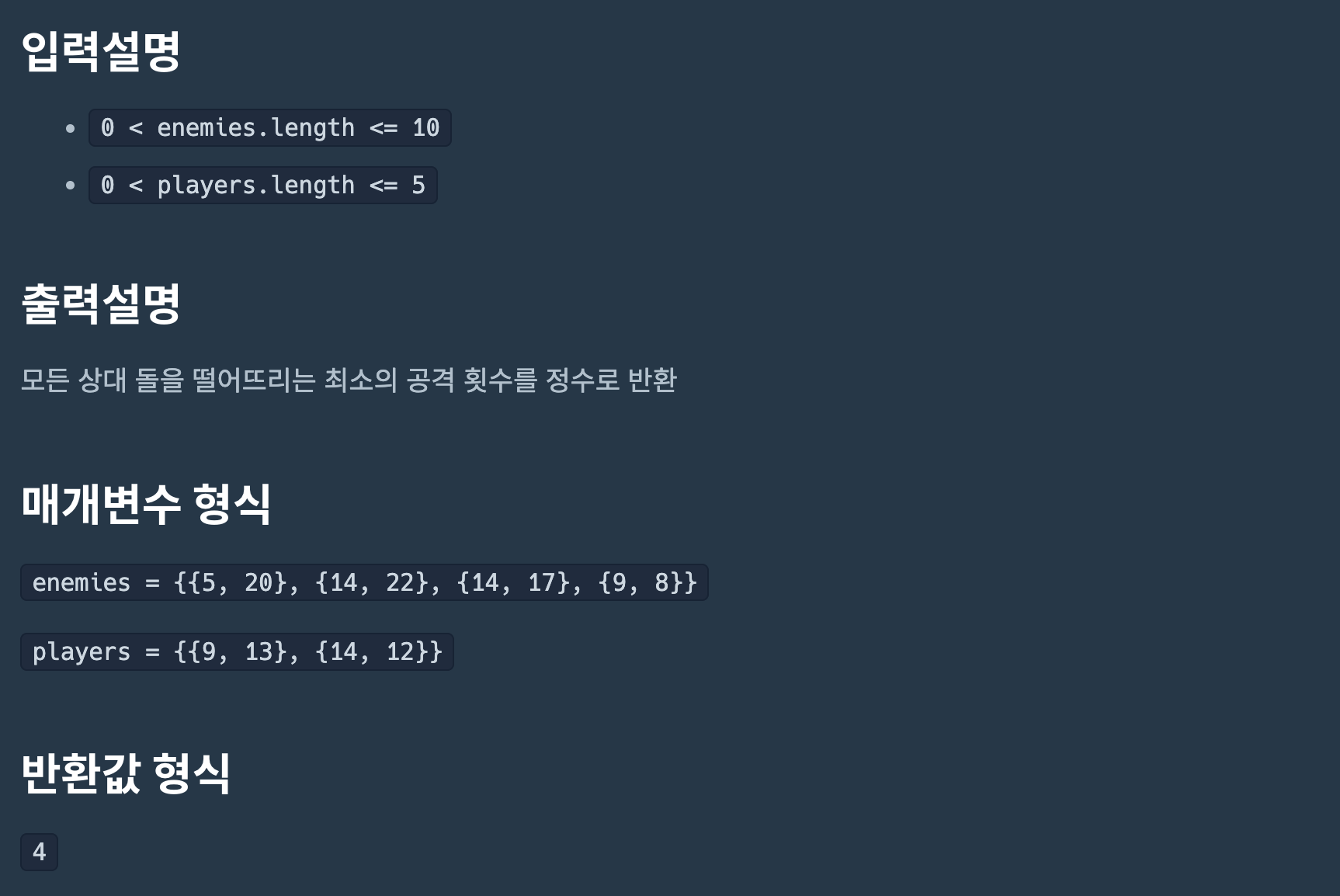
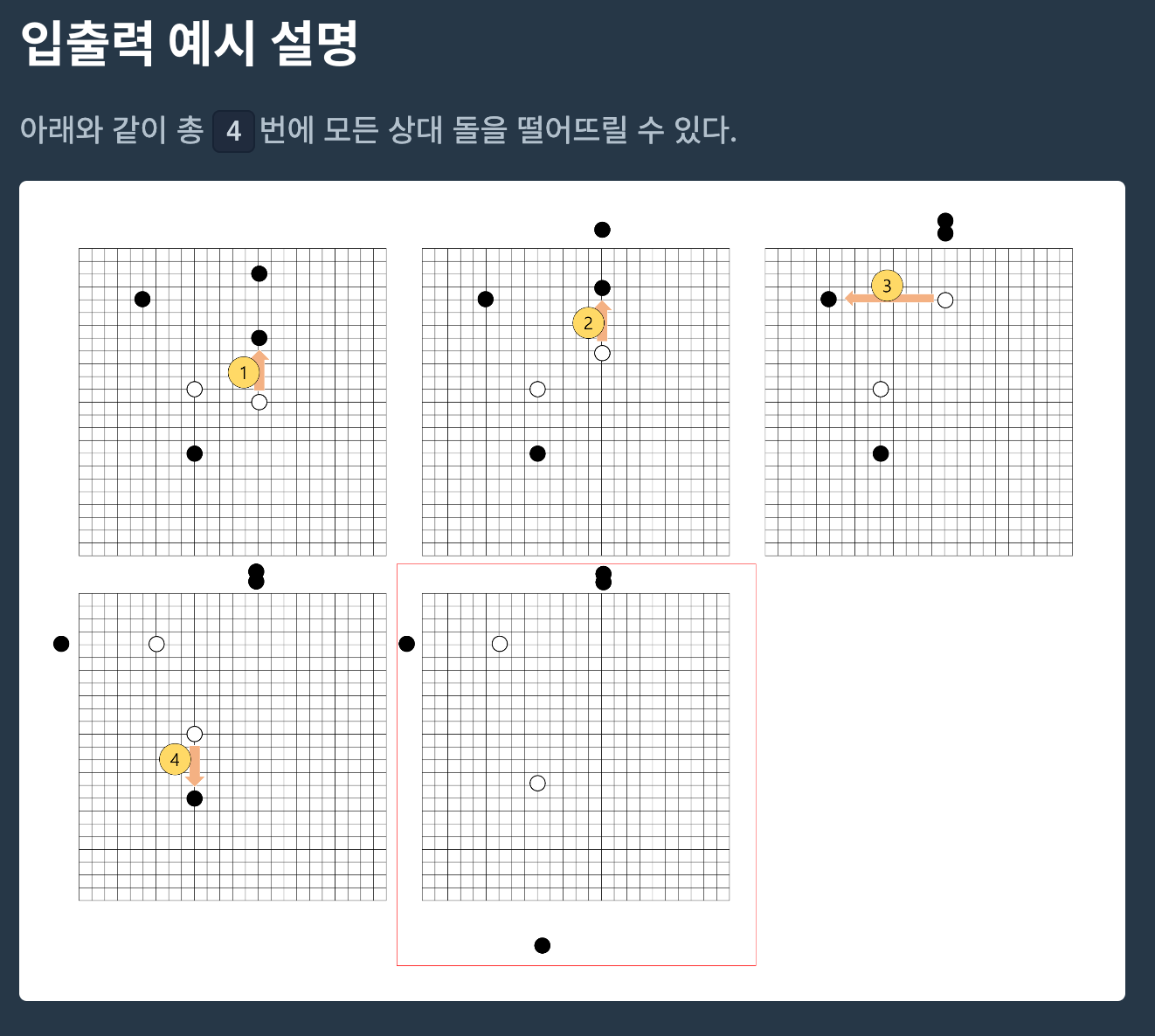
풀이
"""
 * 이 문제는 DFS로 탐색하는 문제입니다.
 * 탐색 아이디어 자체는 간단하지만, 조건에 맞게 구현하는 난이도가 상당한 문제입니다.
 * 각 돌을 상하좌우로 치는 경우를 모두 따져보되, 다른 돌과 부딛히면 연쇄적으로 처리하는 것이 핵심입니다.
 * board를 매번 만들어서 dfs하도록 구현하였지만, board를 사용하지 않을 경우 더 효율적인 구현이 됩니다.
 * 단, 난이도가 높아져서 구현하는 시간이 더 오래 걸리니, 메모리가 부족한 경우 구현을 고려해볼 수 있습니다.
 */
"""


from copy import deepcopy

def solution(enemies, players):
    result = float('inf')

    def dfs(count, enemies, players):
        nonlocal result

        board = make_board(enemies, players)

        H = len(board)
        W = len(board[0])

        if len(enemies) == 0:
            if result > count:
                result = count
            return

        if len(players) == 0:
            return

        if count >= result:
            return

        for x, y in players:
            # direction 1
            new_board = deepcopy(board)
            curr = new_board[y][x]
            moved_y = y
            while curr:
                new_board[moved_y][x] = 0
                while moved_y - 1 >= 0 and new_board[moved_y - 1][x] == 0:
                    moved_y -= 1
                if moved_y == 0:
                    break
                else:
                    new_board[moved_y][x] = curr
                    curr = new_board[moved_y - 1][x]
                    moved_y -= 1
            e, p = rocks_from_board(new_board)
            dfs(count + 1, e, p)

            # direction 2
            new_board = deepcopy(board)
            curr = new_board[y][x]
            moved_y = y
            while curr:
                new_board[moved_y][x] = 0
                while moved_y + 1 < H and new_board[moved_y + 1][x] == 0:
                    moved_y += 1
                if moved_y == H - 1:
                    break
                else:
                    new_board[moved_y][x] = curr
                    curr = new_board[moved_y + 1][x]
                    moved_y += 1
            e, p = rocks_from_board(new_board)
            dfs(count + 1, e, p)

            # direction 3
            new_board = deepcopy(board)
            curr = new_board[y][x]
            moved_x = x
            while curr:
                new_board[y][moved_x] = 0
                while moved_x - 1 >= 0 and new_board[y][moved_x - 1] == 0:
                    moved_x -= 1
                if moved_x == 0:
                    break
                else:
                    new_board[y][moved_x] = curr
                    curr = new_board[y][moved_x - 1]
                    moved_x -= 1
            e, p = rocks_from_board(new_board)
            dfs(count + 1, e, p)

            # direction 4
            new_board = deepcopy(board)
            curr = new_board[y][x]
            moved_x = x
            while curr:
                new_board[y][moved_x] = 0
                while moved_x + 1 < W and new_board[y][moved_x + 1] == 0:
                    moved_x += 1
                if moved_x == W - 1:
                    break
                else:
                    new_board[y][moved_x] = curr
                    curr = new_board[y][moved_x + 1]
                    moved_x += 1
            e, p = rocks_from_board(new_board)
            dfs(count + 1, e, p)

    dfs(0, enemies, players)
    return result

def make_board(enemies, players):
    x_min = min((x[0] for x in enemies + players))
    x_max = max((x[0] for x in enemies + players))
    y_min = min((x[1] for x in enemies + players))
    y_max = max((x[1] for x in enemies + players))

    for i in range(len(enemies)):
        enemies[i] = [enemies[i][0] - x_min, enemies[i][1] - y_min]

    for i in range(len(players)):
        players[i] = [players[i][0] - x_min, players[i][1] - y_min]

    W = x_max - x_min + 1
    H = y_max - y_min + 1

    board = [[0 for _ in range(W)] for _ in range(H)]

    for x, y in enemies:
        board[y][x] = 1

    for x, y in players:
        board[y][x] = 2

    return board

def rocks_from_board(board):
    enemies = []
    players = []
    for i in range(len(board)):
        for j in range(len(board[0])):
            if board[i][j] == 1:
                enemies.append([j, i])
            elif board[i][j] == 2:
                players.append([j, i])
    return enemies, players
Testcase
# 테스트 1
입력값 〉 [[0, 12], [9, 14], [9, 9], [4, 0]], [[4, 5], [9, 4]]
기댓값 〉 4
5. 최소 합차 (1)
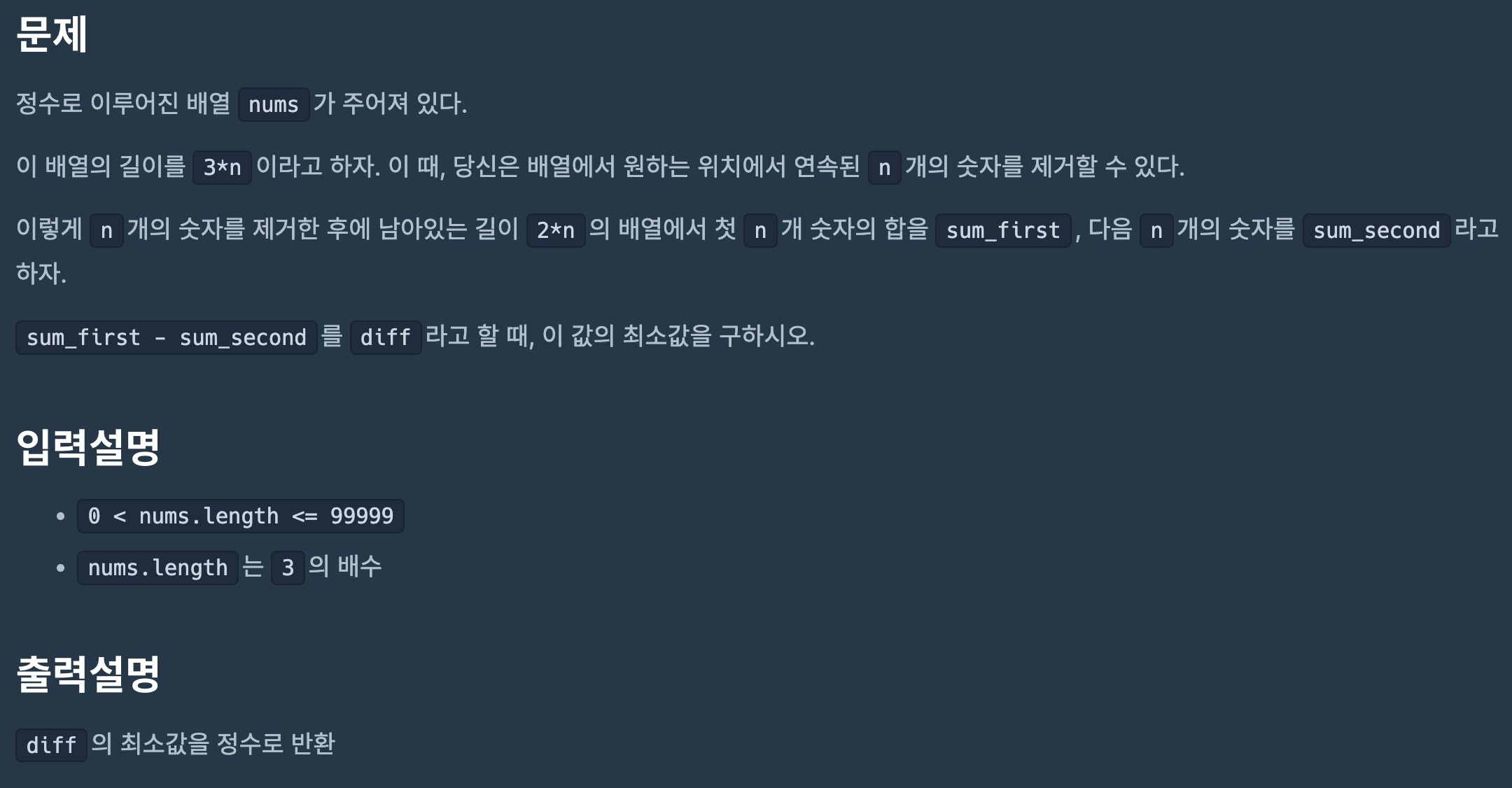
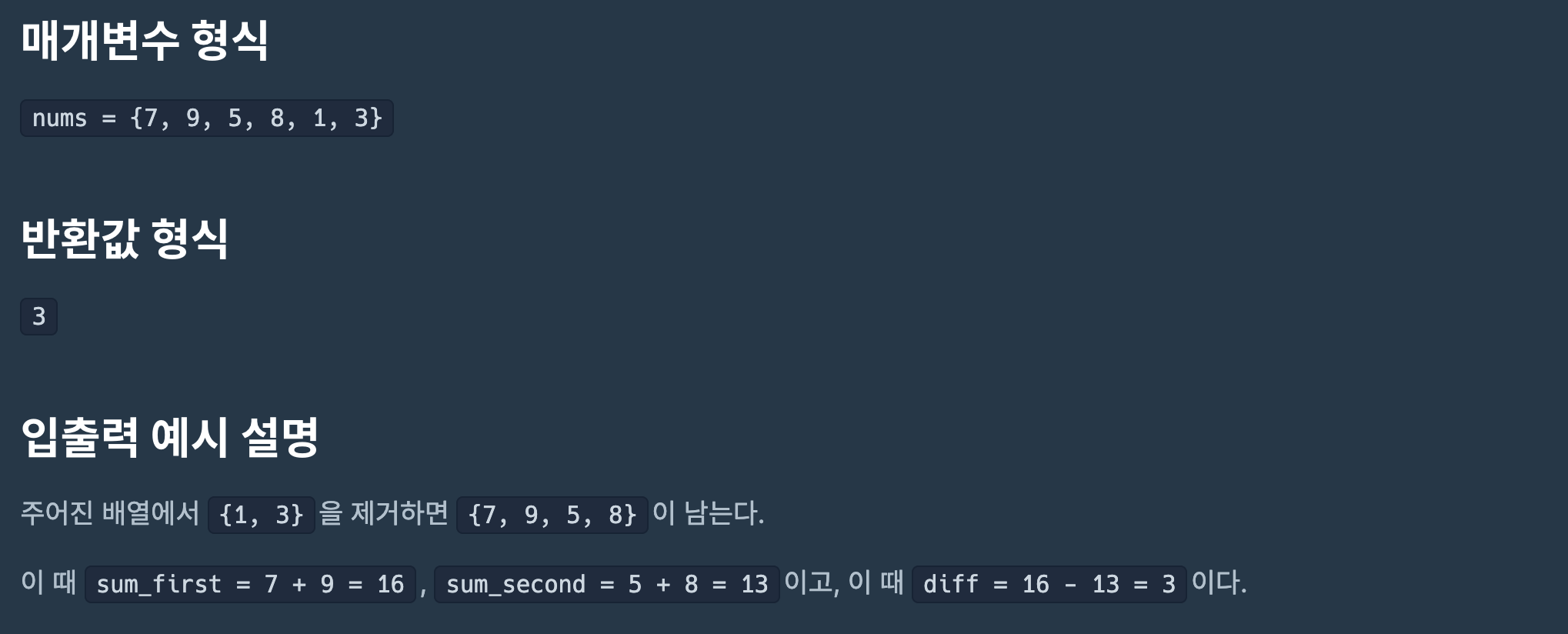
풀이
"""
 * 이 문제는 누적합을 이용하여 연산을 최소화 하는 문제입니다.
 * 수학적인 센스가 필요한 문제라고 할 수 있겠습니다!
"""

def solution(nums):
    n = len(nums) // 3

    cumsum = [0 for _ in range(len(nums))]
    cumsum[0] = nums[0]
    for i in range(1, len(nums)):
        cumsum[i] = cumsum[i-1] + nums[i]

    min_diff = float('inf')

    sum_second = cumsum[3*n-1] - cumsum[2*n-1]
    for i in range(n):
        if i == 0:
            sum_first = cumsum[2*n-1] - cumsum[n-1]
        else:
            sum_first = cumsum[i-1] + cumsum[2*n-1] - cumsum[n-1+i]

        diff = sum_first - sum_second
        min_diff = min(min_diff, diff)

    sum_first = cumsum[n-1]
    for i in range(n+1):
        sum_second = cumsum[2*n-1-i] - cumsum[n-1] + cumsum[3*n-1] - cumsum[3*n-1-i]
        diff = sum_first - sum_second
        min_diff = min(min_diff, diff)

    return min_diff
Testcase
# 테스트 1
입력값 〉 [7, 9, 5, 8, 1, 3]
기댓값 〉 3

# 테스트 2
입력값 〉 [5, 2, 3, 5, 9, 14, 2, 3, 15, 19, 4, 6]
기댓값 〉 -32
출처
해당 문제와 코드는 제로베이스(ZeroBase)에서 제공받았습니다.
모든 자료는 저작권법에 의하여 보호받는 저작물로서 이에 대한 무단 복제 및 배포를 원칙적으로 금합니다.
Comment